

The growth of stablecoin settlement TRON (TRX) reflects more than just rising transaction volume. This is because it increasingly acts as the preferred network for real-world dollar transfers.
Tether (USDT)’s low fees, fast settlement, and deep liquidity continue to attract remittances, peer-to-peer payments, and cross-border transactions that require speed compared to complex DeFi functions.
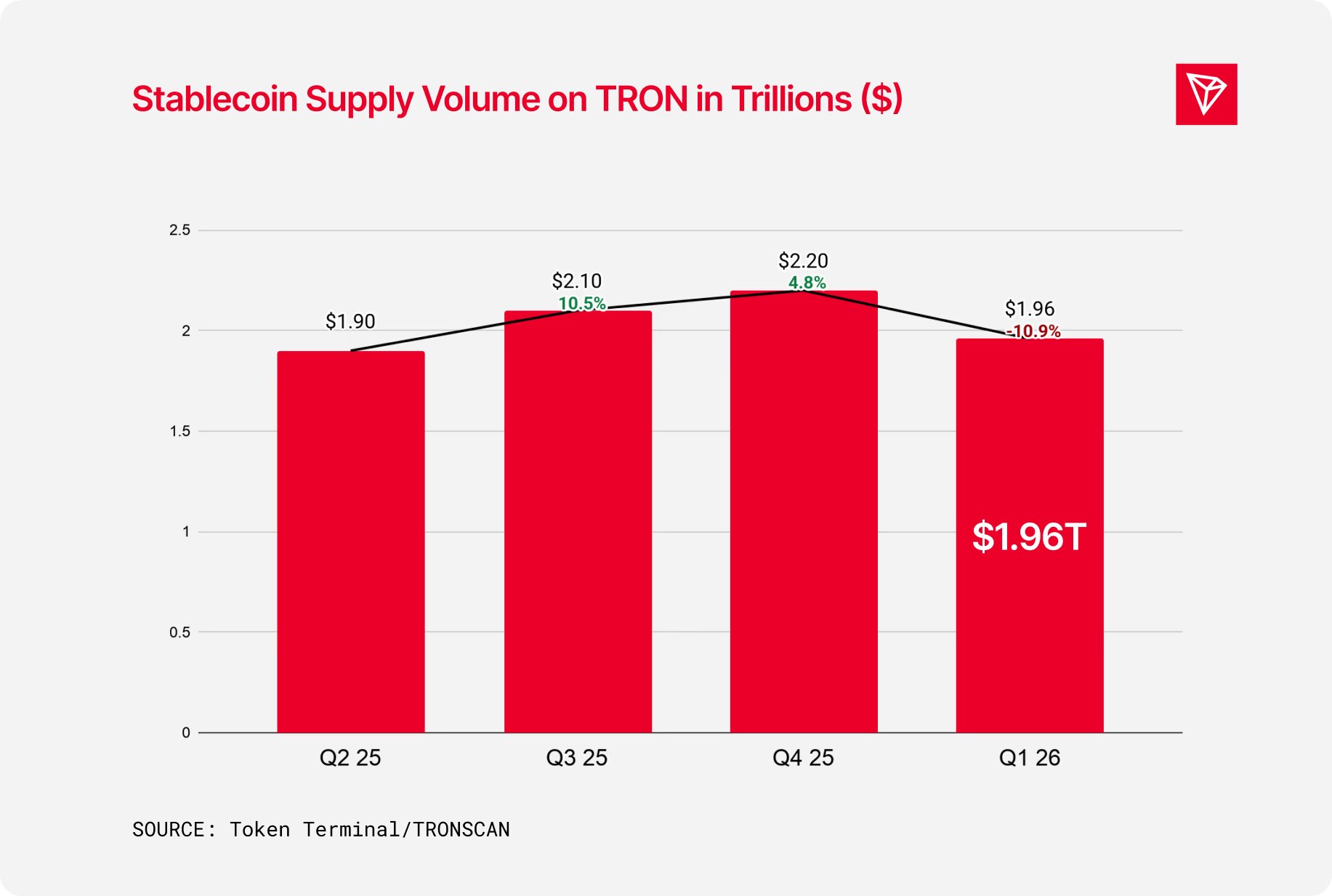
This trend was instrumental in processing $1.96 trillion in stablecoin settlements for the first quarter of 2026. You see. Meanwhile, TRON also hosts approximately $85-86 billion in USDT. Much of this usage stems from users’ need for recurring payments.
As such, there is strong evidence to support that usage patterns provide a basis for structural value in a network.
If the flow of payment dollars into the system continues to grow at the same rate or perhaps increases and if USDT Issuance continues to expand, and then TRON will consolidate itself as a leader in stablecoin settlement. Otherwise, faster competitors could erode its advantage.
User activity reflects payment growth
TRON’s increasing use of stablecoins to settle transactions has boosted network activity. However, adoption trends show both positive and negative signs.
Daily active users rose 16% over the past 30 days to nearly 4.4 million, which exceeds the Q1 average of 3.2 million and indicates stronger engagement from current participants.
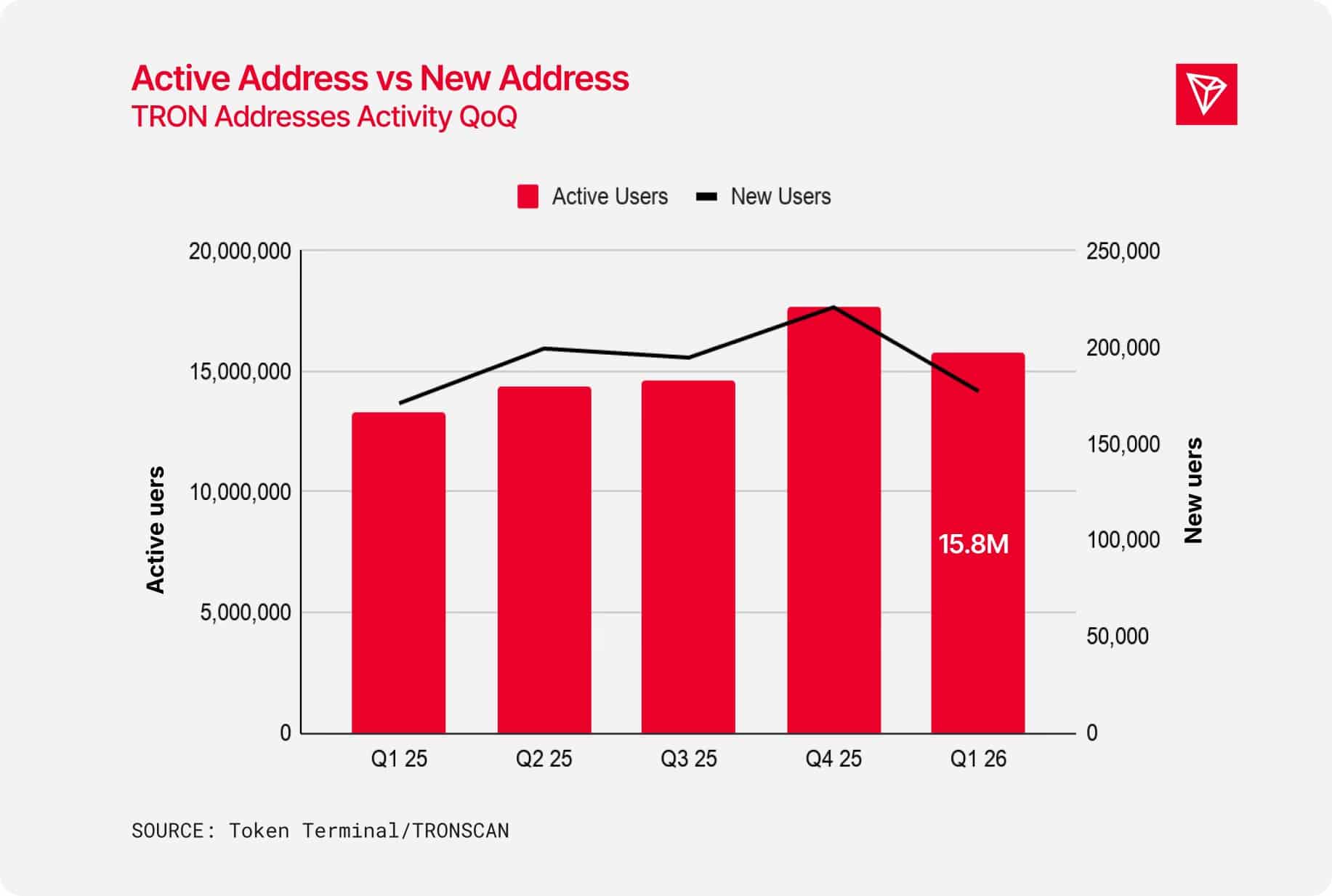
However, quarterly data shows active addresses fell to 15.8 million from the peak in Q4 2025, while new address creation also declined. Thus, it seems that although the number of new users being added is decreasing, there is still strong activity due to users being able to pay using the network’s stablecoins.
The network’s long-term growth will likely depend on additional new users entering the ecosystem as well as sustainable payments through stablecoins. If existing users continue to drive transaction growth, network activity may remain high. Furthermore, sustaining expansion over the long term will likely require stronger new user onboarding coupled with continued demand for stablecoin payments.
Retaining capital supports network growth
TRON’s expanding payment network keeps capital on-chain, but growth is still concentrated in stablecoin settlements rather than broader DeFi activity. At press time, TVL has grown to approximately $4.4 billion and is primarily backed by stablecoins that stabilize liquidity on the network.
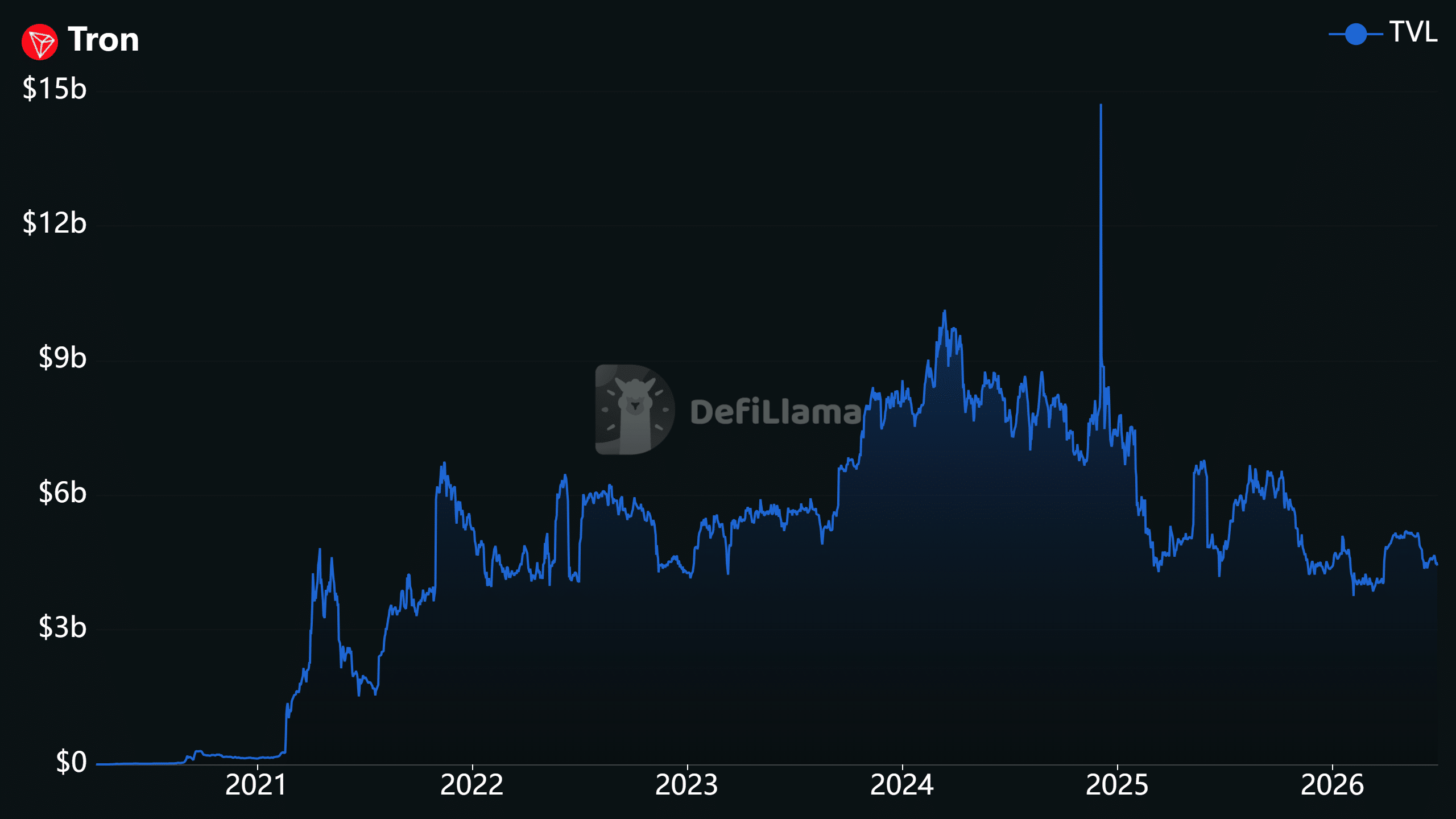
Instead of exiting immediately after settlement, a large portion of capital is traded between transfers, maintaining transaction volume and network revenue. Efficiency also supports frequent TRX copies and validation rewards without significantly increasing user costs.
However, dominance in payments has not translated into strong adoption of DeFi. Lending, decentralized exchanges, and smart contract activity remain relatively smaller contributors to usage.
If the liquidity held in these sectors gradually expands, TRON could strengthen its broader ecosystem. Otherwise, it will likely continue to lead payments, relying less on DeFi-driven growth.
Final summary
- TRON payments growth has remained strong, but expansion of the broader ecosystem still depends on the adoption of DeFi.
- TRX has retained payment liquidity, although sustainable growth requires stronger on-chain facilities beyond settlements.



