

US-headquartered LLOG Exploration, a subsidiary of Harbor Energy, saw production decline at its Gulf of America (US Gulf of Mexico) assets following an upwelling spill; However, the start-up of the sidewell supports near-term production, as the company and its joint venture (JV) partners move forward with a structured remediation plan to replace the upwelling well.
After discovering a minor leak in the riser in Who dat In February 2026, approximately 15,000 barrels of oil equivalent per day of total production from seven wells were affected. The joint venture, which includes LLOG (operator, 40%), Karoon (40%) and Westlawn (20%), continues to progress a structured remediation plan, with the operator notifying that the next phase includes removal and analysis of the riser, currently planned to begin in the third quarter of 2026.
Manifold E production is expected to resume in the fourth quarter of 2027, subject to the results of this work. Turnaround operations for the A1 production well began in early April with production starting on July 13. Production from the Who Dat A1 bypass well continues to increase, currently producing 1,700 barrels of NRI oil equivalent, in line with expectations.
Another sidetrack, G1 ST, is expected to be drilled in the second half of 2026, and is subject to final technical evaluation, regulatory and joint venture approvals, Caron explains. If given the green light, this is expected to be a positive contribution to production in the near term while the joint venture continues to develop the Riser E processing process.
Carrie LockhartCEO and Managing Director of Caron commented: “At Who Dat, the A1 bypass was commissioned on 13 July, providing a positive near-term contribution as the joint venture continues to develop the E riser restoration workstream. Operator LLOG is preparing to remove the riser that produced a minor leak for inspection and analysis, with removal operations expected to begin in Q3 2026.
“Our current base case assumes that one or both of the E risers will need to be replaced, with E manifold production expected to resume in the fourth quarter of 2027. The joint venture also continues to leverage additional production opportunities across the assets.”
The average realized price for Who Dat liquids, including oil, condensates and natural gas liquids, was $101.93 per barrel, 55% higher than the previous quarter, in line with the increase in global oil prices and wider spreads for March crudes – benchmark.
Who Dat’s average realized gas price was $4.08 per mmcf, down 47% from the previous quarter, reflecting the typical decline in Henry Hub’s benchmark pricing during the US spring season, when demand for natural gas power declines.
Who Dat’s total production in Q2 2026 was 1.03 million barrels of oil equivalent per day, compared to 1.67 million barrels of oil equivalent in Q1 2026, at an average rate of 11,360 barrels of oil per day, compared to 18,300 barrels of oil equivalent per day in Q1 2026.
Production for the quarter on an NRI basis was 0.2 4 million barrels of crude oil, compared to 0.38 million barrels of NRI in the previous quarter, reflecting the temporary closure of the E manifold, Caron explains.
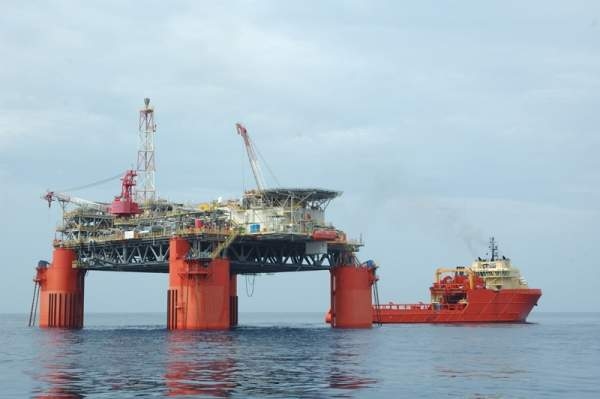
The Who Dat conventional deepwater oil and gas project is located 800 meters offshore Louisiana within the federal waters of the US Gulf.
The oil and gas produced are processed through… Who Dat Floating Production System (FPS) And transported to markets via common carrier pipelines.

Boost your brand with marine energy ⤵️
Steal the spotlight and establish your brand in the heart of the outside world!
Join us to make a greater impact and grow your presence at the core of the marine energy community!



