
Morgan Stanley has launched its own exchange-traded product, the Morgan Stanley Bitcoin Trust (MSBT), in a market that you believe is still in its infancy.
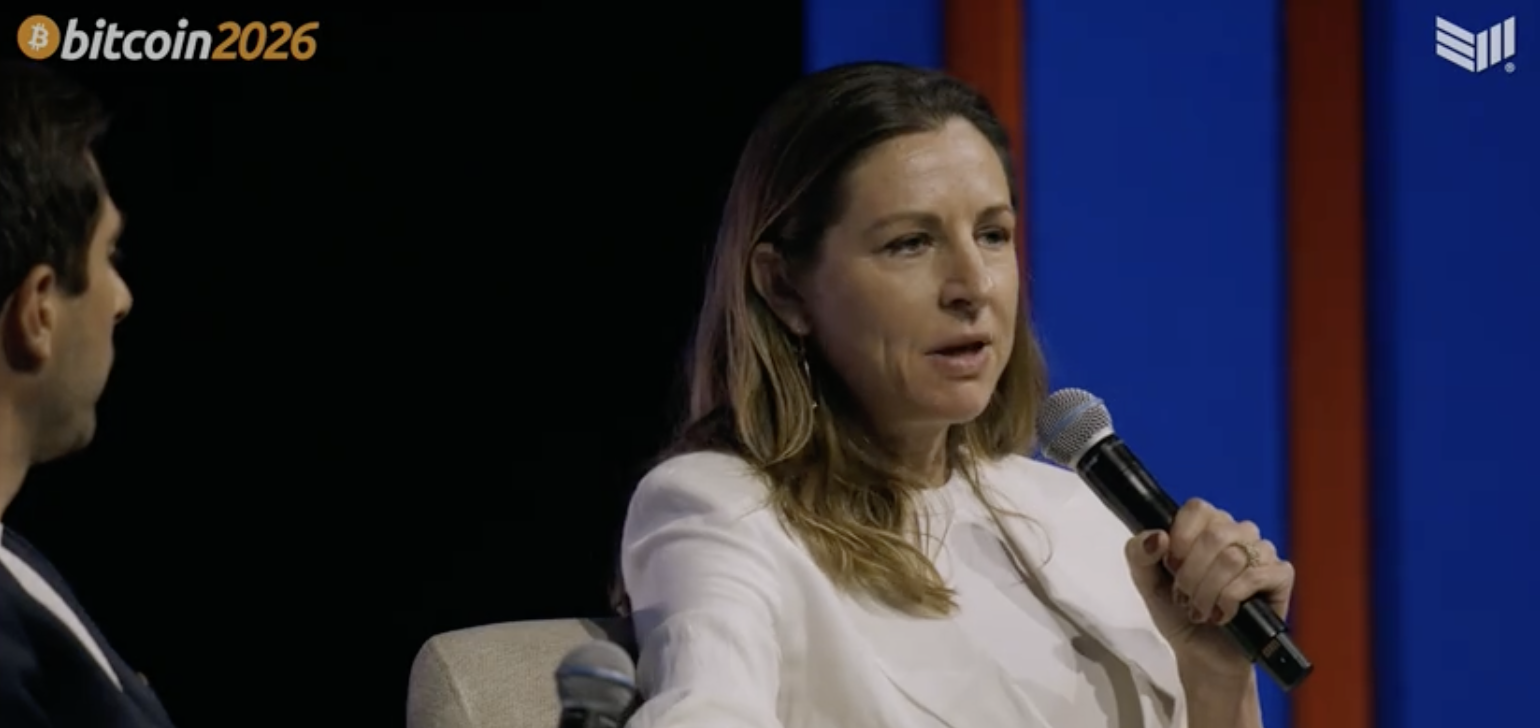
In a panel on Wednesday he moderated Tyler EvansAmy Oldenburg, the bank’s head of digital assets, spent the better part of an hour making an argument in favor of bitcoin that few clients heard in full, and said the gap was the industry’s most pressing problem.
“We have to start with bitcoin,” Oldenburg told the audience, noting the asset’s market cap of about $1.5 trillion and its distance from the rest of the cryptocurrency landscape.
She was careful to draw a line between bitcoin and cryptocurrencies as a broad category, a distinction she said most retail and institutional clients still don’t make with confidence. The company wants to see this distinction established in basic research, not just narratives.
Oldenburg: Bitcoin faces an educational problem
She said that the education problem is profound. Many investors still associate Bitcoin with its early history of use by bad actors, and struggle to see beyond that framework when evaluating allocation.
Oldenburg said that when clients ask about yield or regulated exposure, her team tries to be direct: “You can present it as yield, but the underlying asset is bitcoin.” This clarity is still missing from most market conversations, she said, and there is “a lot of work to be done.”
MSBT It withdrew more than $100 million In its first week of trading, this was a strong early sign of a product the bank describes as designed for the full range of its customer base rather than a narrow segment.
But Oldenburg was quick to put this number into context. All initial flows came through self-directed accounts, as the fund was not yet available on the advisory platform.
She noted that the bank announced a 2-4% cryptocurrency distribution The recommendation, and that even with these guidelines in place, it has been slow to be taken up by advisors. She reminded the audience that the product has been on the market for less than a year.
To bridge this gap, Morgan Stanley works from the inside out. Oldenburg said the company is rolling out in-house training so financial advisors can talk to clients about Bitcoin with confidence, and that her team spends “hour after hour after hour” on the phone familiarizing clients with the templates and customization frameworks.
She said the bank designs products for clients with different needs and wants its platform to cover all of those needs, including clients who want a live ETP wrapper, and that instant cryptocurrency trading is coming for those on the wealth management side.
Regarding guardians, Oldenburg acknowledged the complexity of the decision. There is no shortage of service providers in the market, and choosing among them was not easy, which prompted the company to work with more than one provider. Morgan Stanley eventually Exploited Coinbase and BNY Mellon as custodians of MSBT.
When the conversation turned to high-beta Bitcoin, Oldenburg described Strategy, the Michael Saylor-led firm formerly known as MicroStrategy, as “a good friend of Morgan Stanley,” and said the bank had worked alongside it during its development.
She said most exposure to this vehicle so far has come from retail and that “digital credit” as a category will take time to develop.
Morgan Stanley Buying Bitcoin ‘Not Out of the Box’
On the issue of banks keeping bitcoin on their balance sheets, Oldenburg said it was “not out of the question” if regulatory progress continues, but it is measured by its framing.
The United States needs greater alignment among its financial regulators, she said, and for a global firm like Morgan Stanley, the picture is still more complex — each jurisdiction comes with its own framework.
I concluded where I began: about the need for research of scope. She said the market has commentators and figures that investors trust and follow, and the work ahead is bringing this type of grounded, accessible analysis to the mainstream.
“We are still very early in this journey,” she said. “The allocation is very low. It’s still really early.”



