
Markets
The market rose last Friday after the Iranian Foreign Minister announced that the Strait of Hormuz was “fully open.” At the same time, other US (including President Trump) and non-US sources have indicated that an agreement on the nuclear program may be within reach. The price of Brent crude oil temporarily fell below $90 per barrel (closed at $90.4). The three major US stock indexes (Dow, S&P 500 and Nasdaq) all closed at new historic highs. The Eurostoxx 50 index has not reached that point yet, but it also added +2% to close at 6057.71. Even though a return to normal in energy supplies will take a long time, even if an agreement is reached, interest rate markets are discounting the prospects of a rate hike by the central bank as an oil price (hmm?) below $100 a barrel provides time to assess potential long-term inflationary implications. US yields fell between 7.2 basis points (5 years) and 4.9 basis points (30 years). EMU interest rate markets outperformed as bond yields fell between 10.9 basis points (2 years) and 5 basis points (30 years). Financial markets have almost completely ruled out any possibility of a rate hike by the ECB next week, and see less than two 25 basis point rate hikes by the end of the year (+/-38 basis points discounted). The dollar initially fell sharply amid general optimism with the dollar index temporarily falling below 98 and EUR/USD reaching the 1.185 area. However, the greenback quickly regained its strength to close little changed (EUR/USD 1.1765; DXY 98.10).
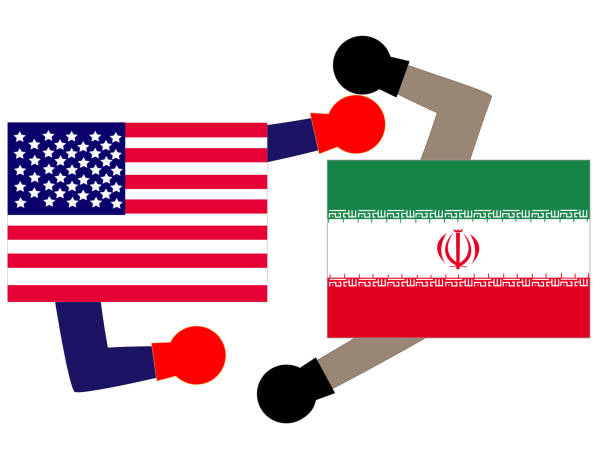
The weekend showed that optimism about Iran and the United States reaching a mutually acceptable agreement is not as clear-cut as was suggested on Friday. Iran is not prepared to meet US conditions on its nuclear programme, and the Strait of Hormuz has proven de facto not to be (‘fully’) open. The situation escalated further when the United States seized an Iranian ship in the Gulf of Oman, clouding the prospects for new talks between the United States and Iran that had been hoped to take place before the ceasefire deadline on Tuesday evening. US President Trump even repeated his threat that the United States may attack Iran’s infrastructure if an agreement is not reached. From a market perspective, trading is once again headed for a period of limited visibility as the ceasefire deadline approaches on Tuesday evening. However, the reaction in Asian (stock) markets this morning remains orderly. Most indices even trade with much smaller gains compared to the US and Europe on Friday (eg Nikkei +0.57%). US bond yields are rebounding 1.5-2.5 basis points across the curve. ST EMU returns add up to 5 basis points. Brent crude returns to $95 per barrel and interest rate markets still see oil prices below $100 per barrel, giving central banks time to assess the impact of current developments. The dollar is regaining more strength (DXY 98.35; EUR/USD 1.175). Trading will likely be driven once again by headlines about the conflict in the Middle East. Markets still adopt the working assumption that the parties will try to avoid a new outright military escalation. Aside from the conflict in the Middle East, the environmental assessment is weak today. We are watching British Prime Minister Starmer’s appearance before the House of Commons regarding the appointment of Peter Mandelson as ambassador to the United States, which may increase pressure on his position as prime minister. The EUR/GBP pair is standing just above 0.87.
News and opinions
Moody’s stripped Belgium of its Aa3 rating and downgraded it to A1 with a stable outlook. It overshadows the decision made by Fitch last year which was the first (ever) of the big three rating agencies to downgrade the rating below the ‘AA’ category. Moody’s decision reflects three interconnected developments related to Belgium’s fiscal outlook, growth perspectives, and institutional architecture (the end-2025 budget process demonstrated the limits of politically feasible fiscal consolidation). Modest medium-term growth, rising interest expenses and structural increases in spending due to aging-related social risks as well as defense have exacerbated an already challenging government budget picture. Under Moody’s baseline, the fiscal deficit remains high at around 5% of GDP. Debt to GDP is increasing despite significant consolidation measures taken by the government. The rating agency expects debt to rise to 116% of GDP by 2030 from 104% in 2024. The growth trend will remain well below the average growth rate of around 1.5% over the period 2010-2019, indicating a structurally weaker growth environment than the one that supported Belgium’s fiscal position in the past.
The Wall Street Journal reported that the UAE has begun talks with US Treasury Secretary Bescent about the idea of a foreign currency swap line. There was no need for such financial support at the time, but there are concerns that the war could inflict significant damage to its economy (damaged energy infrastructure and inability to transit Hormuz) and its position as a global financial centre, depleting foreign exchange reserves and causing an exodus of funds. According to officials cited by the Wall Street Journal, Emirati officials also told US officials that if the UAE ran short of dollars, it might have to use the Chinese yuan or currencies of other countries for oil sales and other transactions.



