

- Nonfarm Payrolls report enters the spotlight after hawkish Fed.
- The Reserve Bank of Australia is preparing to raise interest rates for the third time in a row.
- The Canadian Employment Report is released alongside the Non-Farm Payrolls (NFP) report.
- CPI data is also available for Switzerland and New Zealand for jobs.
Tensions in the Middle East lift the dollar and yields
The US dollar saw a rebound against its major counterparts this week, even though the Middle East ceasefire remains in place. The week began with a new wave of optimism when news reached the wires about Iran offering the United States a proposal to end the conflict in the Middle East. However, the cheer was short-lived, as according to a US official, President Trump was not satisfied with the proposal and remained willing to extend the blockade.
This has pushed the US dollar and Treasury yields higher as concern grows about the Strait of Hormuz remaining closed for longer. Fears that this could lead to firmer inflation in the future have prompted market participants to scale back their bets on a rate cut, with the Federal Reserve’s decision on Wednesday cooling any faint hopes for a potential cut at the end of the year.
The Fed decided to refrain from pressing the interest rate cut button, noting that inflation is still too high. The decision was very divided, with one member voting in favor of a rate cut at this meeting, but three others voting to remove or delay any signs of future rate cuts. This has prompted investors to unwind their bets on a rate cut and even flag a more than 50% chance of a rate hike by April 2027.
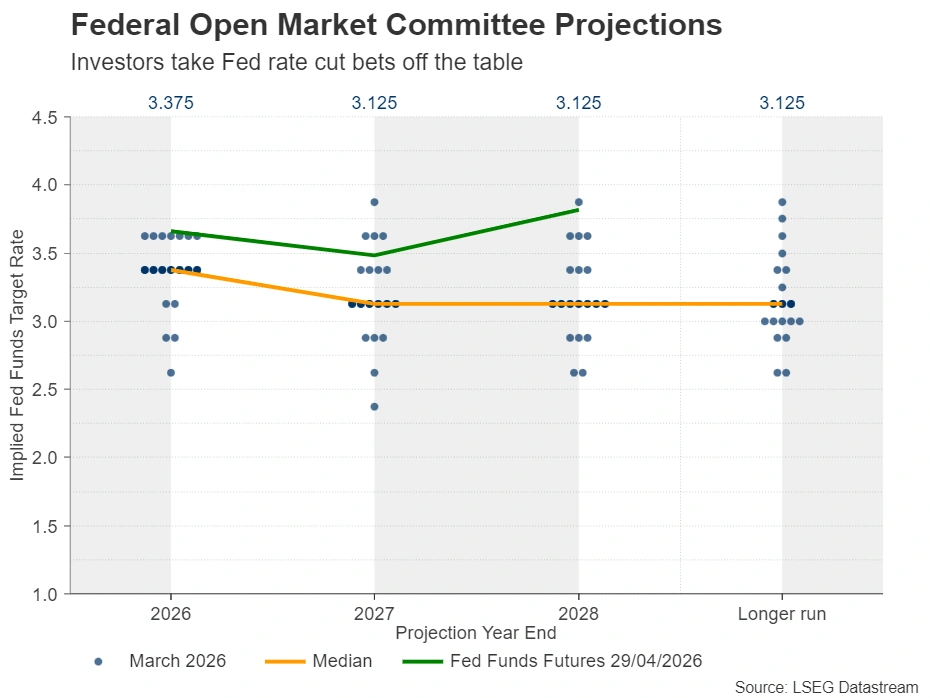
Nonfarm payrolls report reshapes Fed rate speculation
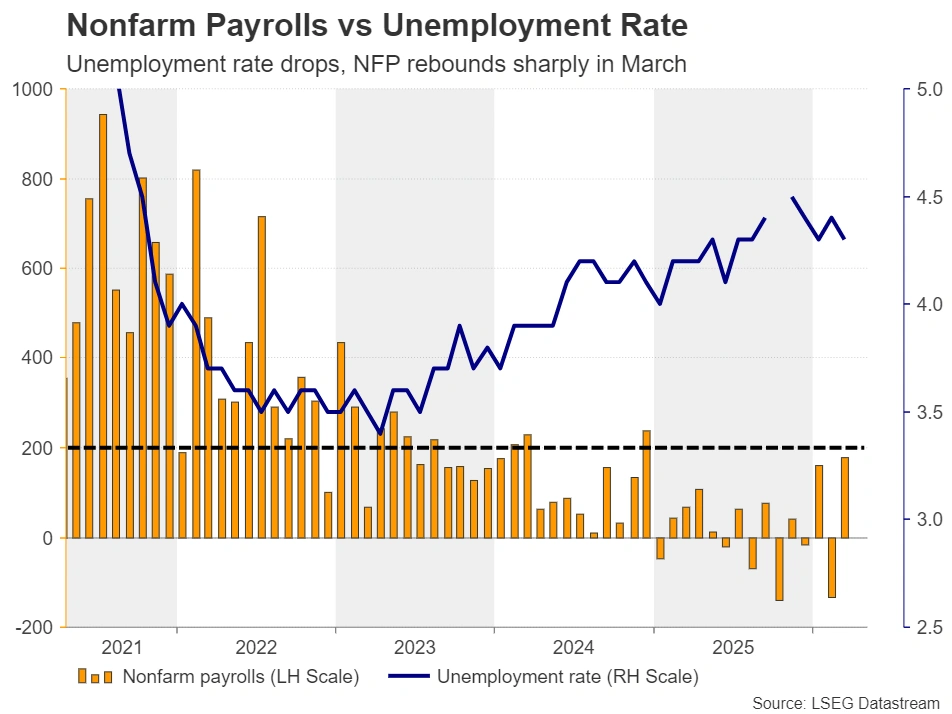
With the next meeting scheduled for June, likely the first under Kevin Warsh’s leadership, investors could look to Friday’s nonfarm payrolls data as they try to gauge how the Fed will proceed from here on out. The ADP report on the private employment sector will be released on Wednesday.
Nonfarm payrolls rebounded strongly in March, rising by 178K after contracting by 92K in February, while the unemployment rate fell to 4.3% from 4.4% and average hourly earnings slowed to 3.5% year over year from 3.8%. Another month of strong job gains, coupled with accelerating wage growth, which could exacerbate concerns about inflation, could add more credence to the idea that the Fed does not need to cut interest rates further this year.
The 4-week moving average of weekly ADP employment change rose significantly in April compared to previous months, confirming the idea that the private sector, at least, has enjoyed strong job growth, tilting the risks to the monthly ADP reading and, by extension, Friday’s non-farm payrolls report to the upside.
The Reserve Bank of Australia is set to raise interest rates again, will it maintain its hawkish stance?
Following last week’s central bank crackdown, the torch will be passed on Tuesday to the Reserve Bank of Australia. At its last meeting, on March 17, the bank went on to raise interest rates for the second consecutive time by a quarter of a percentage point, citing higher inflation and stronger-than-expected economic growth.
However, the decision was close, with 5 members voting in favor of raising the rate and 4 voting in favor of maintaining it. This makes next week’s decision even more interesting, even though market participants are 75% likely to pull the trigger on raising interest rates for the third time in a row.
This may be due to a further acceleration in inflation, with all measures moving beyond the upper end of the RBA’s target range (2-3%). In March, the headline CPI rose to 4.6% year-on-year from 3.7% in February, with the average CPI remaining unchanged at 3.3%. This is with the labor market remaining on a growth path, adding 18,000 jobs in March and allowing the unemployment rate to remain at 4.3%.
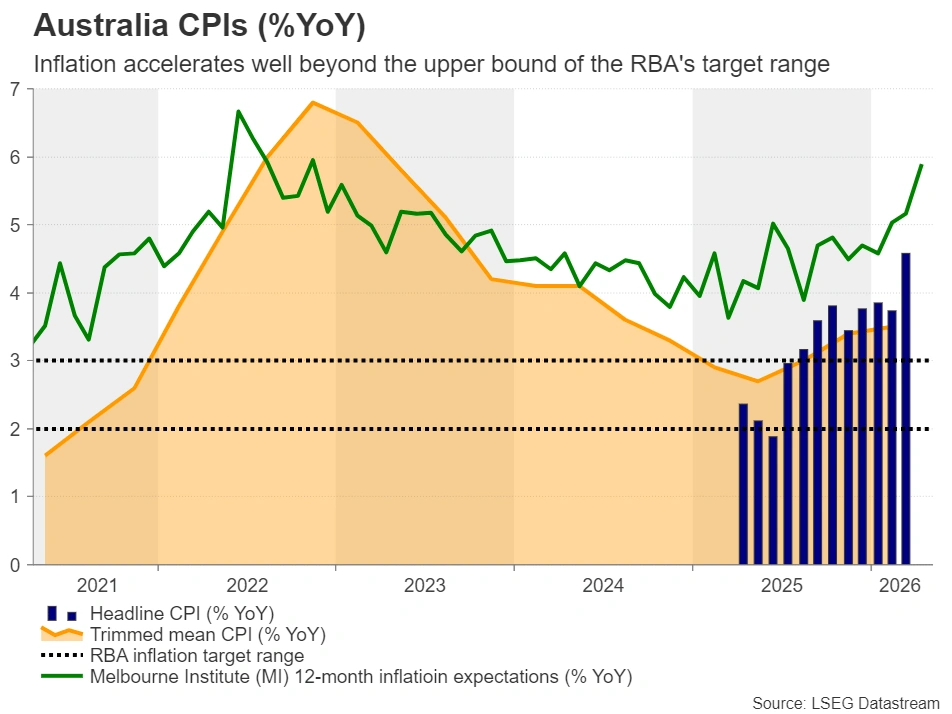
A rate hike alone is unlikely to shake the Australian dollar much. Traders may need to see more members join the hiking camp and receive stronger signals that the bank remains willing to raise interest rates if oil prices continue to pose a threat to inflation.
Jobs reports in Canada and New Zealand also focus on the Swiss CPI
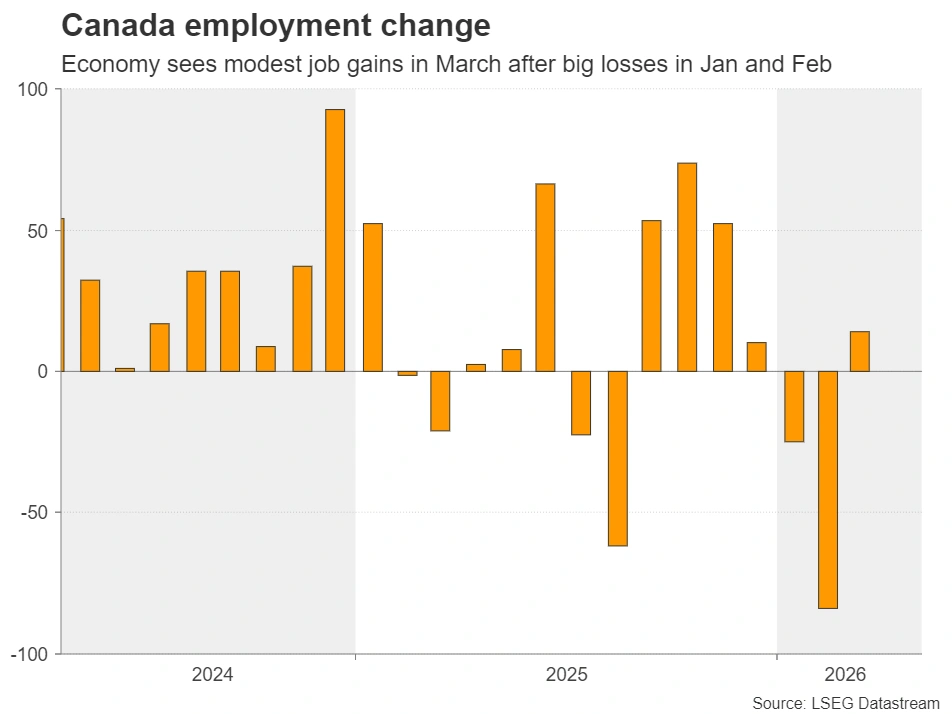
Moving to Canada, the country’s employment report will be released at the same time as US jobs data. The Bank of Canada also held its monetary policy decision on Wednesday. Officials decided to keep the interest rate unchanged, and although they acknowledged that inflation was still above their target, they viewed it as temporary pressure from oil prices. Therefore, even if the Canadian report comes out strong, a less hawkish message from the Bank of Canada compared to the Fed is unlikely to allow the Canadian dollar to outperform the US dollar.
Elsewhere, the Swiss CPI will be released on Tuesday, as a further rise due to the Middle East-related energy crisis may reduce pressure on the Swiss Central Bank to adopt negative interest rates and may also delay potential intervention in the FX market. However, despite the dollar’s recent gains, the franc remains very strong, and if it resumes its prevailing upward trend, deflation fears may resurface and the SNB may remain vigilant and ready to enter the FX market if deemed necessary.
The New Zealand employment report is also on Tuesday’s agenda, but later in the day, during the early Asian session. Although the Reserve Bank of New Zealand indicated a “wait and see” stance at its April meeting, stubbornly high oil prices have investors anticipating a 35% chance of a quarter-point rate hike in a May decision, and a strong jobs report could push that percentage higher, thus strengthening the New Zealand dollar.



