
Pure Point Uranium Collection (TSXV: PTU; US-OTCQB: PTUUF) has completed an integrated geophysical program combining airborne MobileMT surveys with advanced 3D structural modeling across three of its Athabasca Basin projects. The programme, conducted by Expert Geophysics Limited, has significantly enhanced the company’s ability to identify and classify subsurface structures most likely to host uranium mineralisation.
The company operates the Dorado Project under a 50/50 joint venture with IsoEnergy Ltd., where Nova Discovery has returned confirmed assays of up to 8.1% uranium, and the mineral corridor now extends to one kilometre. Purepoint also operates the Hook Lake and Smart Lake projects under a joint venture with Cameco Corporation and Orano Canada Inc. The Company’s wholly-owned real estate portfolio includes additional exploration-stage uranium assets in the Athabasca Basin region.
The Toronto-based uranium exploration company will begin an expanded geophysical program at the Dorado Project later this month, ahead of a drilling campaign planned for June 2026. The new approach provides a more accurate and capital-efficient framework for targeting drilling by integrating MobileMT data into detailed 3D structural models.
Enhanced targeting capabilities and foldable systems
The company has completed MobileMT airborne electromagnetic surveys and 3D structural modeling at three projects: Celeste East, Russell South and Tabbernor. This work has significantly improved subsurface interpretation, enabling Purepoint to more confidently identify and classify drilling targets before committing drill gauges.
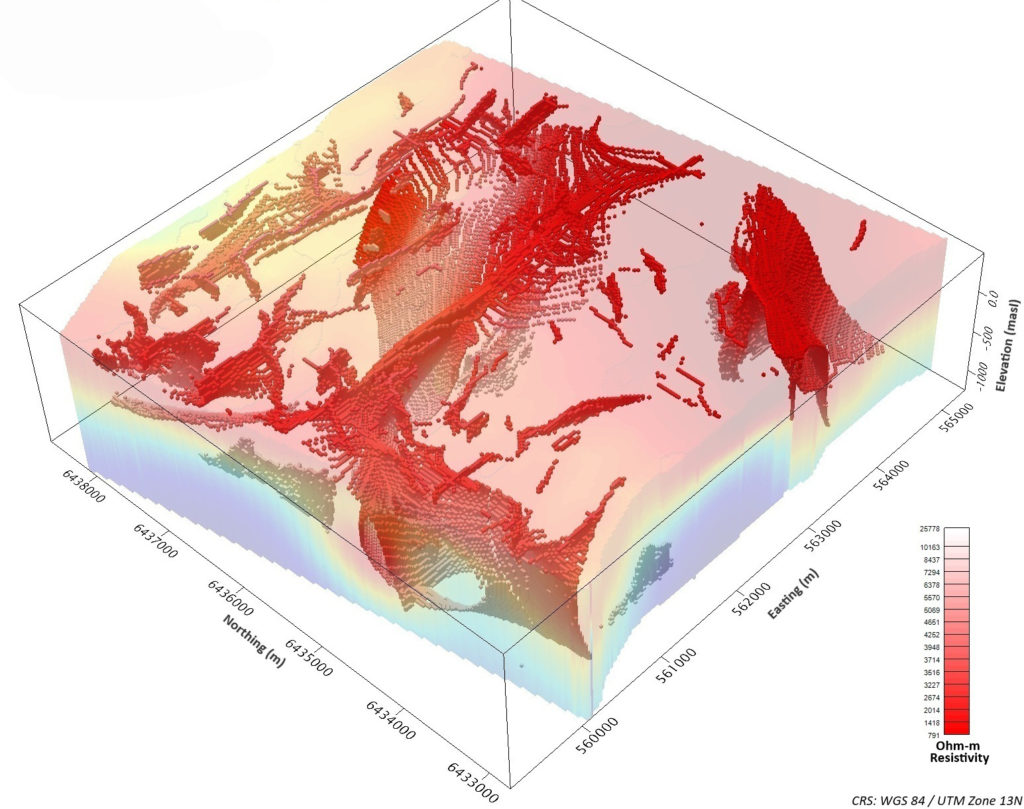
At Celeste East, modeling reveals a folded conductive system with defined hinge zones. These structural geometries are associated with uranium precipitation in the geological environments of the Athabasca Basin. 3D interpretation has identified a structural fold with defined hinge zones and limbs, greatly improving the geological framework. Fold hinge zones create particular interest for exploration because they can generate fracture paths and structural traps for hydrothermal fluids.
MobileMT data were combined with historical geological datasets in the East Celeste to produce a detailed 3D model of subsurface conductivity. Geophysicists have completed the modeling, indicating that the previously interpreted east-west conductor forms part of a broader folded conductor system within the project area. Celeste East operates as part of the Celeste Block Project, a 50/50 joint venture with IsoEnergy.
Breakthrough at Russell South
At Russell South, which is wholly owned by Purepoint, previous geophysical surveys faced limitations from shallow subsurface conductive layers that absorbed and distorted conventional airborne electromagnetic signals. These layers obscured the geology of the underlying basement. MobileMT uses naturally occurring electromagnetic signals to map structures in depth, enabling the company to see conductive structures beneath this obstructive layer.
3D structural modeling of inverted MobileMT data clearly identifies previously unrecognized basement features that have remained inaccessible by conventional airborne electromagnetic methods. This work has produced a series of drill targets with a well-defined structural context.
The wholly-owned Tabbernor project covers a large site of land along an important structural corridor in the Athabasca Basin. The MobileMT results, combined with 3D structural modeling, enhanced the definition of connective trends across the project and created a tidy set of connective corridors for continued exploration.
Expanded program in the future
Purepoint will begin expanded MobileMT surveys at the Dorado and Henday Lake projects following results at Celeste East, Russell South and Tabbernor. At Dorado, surveys aim to produce the same quality 3D structural model that has proven effective across the portfolio. The focus extends beyond the structural settings around Nova Discovery to include all other objectives identified in the project.
Integrating this model with existing drill results should increase targeting accuracy and support more efficient deployment of drilling resources ahead of the June 2026 drill campaign. The integrated 3D modeling framework enables more efficient allocation of drilling resources by allowing targets to be evaluated and classified prior to drilling rig mobilization.
Mobile magnetometry is an airborne geophysical survey that maps subsurface resistivity and conductivity by measuring variations in naturally occurring electromagnetic signals over a wide frequency range. This method allows deep penetration and, when combined with advanced reflectance and 3D modeling, provides a detailed representation of the geological structures and conductive pathways often associated with mineralization.
More information is available at www.PurePoint.ca
Source link



