
As the European Union continues to take steps to restrict Russian revenue flows and ability to export energy to end the Ukrainian crisis, it has imposed a new set of sanctions against the country, expanding its crackdown on the Russian energy industry and expanding the network around the shadow fleet by adding another 46 ships to the listed group.
The European Commission welcomed the adoption of the 20th package of sanctions against Russia by EU member states, which puts more pressure on Russia to participate in negotiations on terms acceptable to Ukraine. The new sanctions are said to have a strong anti-fraud angle and include energy measures, as well as activating an “anti-fraud” tool for the first time. This package, which targets financial services, including cryptocurrencies, trade and media advertising, includes further measures to protect EU operators.
The latest package contains an additional 120 listings, including 33 individuals and 83 entities, resulting in an asset freeze and a ban on funds and economic resources being made available to them, along with a travel ban for individuals. Apart from the sanctions on Russian energy companies, military companies, and their supply chains in third countries, the EU also imposes sanctions on oligarchs, people involved in the kidnapping of children from Ukraine, preachers, and people responsible for the plunder of cultural heritage.
Kaja kalaThe High Representative for Foreign Affairs and Security Policy/Vice-President of the European Commission commented: “Today we have finally broken the stalemate. Along with the €90 billion loan to Ukraine, we have also adopted the 20th sanctions package. The EU will provide Ukraine with what it needs to keep its land while working to prevent those who enable illegal Russian aggression. The Russian war economy is under increasing pressure, while Ukraine is getting a big boost. We must maintain this pressure until Putin understands that his war is going nowhere.”
The 20th package contains multiple energy measures with 36 lists covering both upstream and downstream sectors of the Russian energy sector, including oil exploration, extraction, refining and transportation. The shadow fleet ecosystem is seeing new restrictions, as the EU move aims to further reduce revenues from Russian oil exports by listing additional shadow fleet entities, including those operating in third countries, as well as a large marine insurance company and 46 additional ship listings.
With these additions, 632 ships believed to belong to the Russian Shadow Fleet have now been listed by the European Union and are subject to a port access ban and a ban on receiving services, as the European Union continues to engage with flag states to ensure that their registries do not allow these ships to sail under their flags. While 46 ships were added to the sanctions list, 11 ships were also removed from this 20 package, showing that delisting is a possibility for ships to return to compliance.
The new sanctions include guarantees on tanker sales from the EU to prevent Russian end-use, due diligence by vendors, as well as a mandatory “No Russia” clause that will be passed into sales contracts, expected to prevent the spread of use within the shadow fleet. Furthermore, the new Shadow Fleet cancellation clause will make it easier for ships to be decommissioned or “recycled” and out of the Shadow Fleet.
Regarding the ban on port infrastructure, the new sanctions package includes the inclusion of two Russian ports, Murmansk and TuapseAnd also, for the first time, a third country port, Karimun oil station In Indonesia, for their links to the shadow fleet and circumventing the oil price ceiling. The 20th sanctions package includes the basis for a future ban on the transport of Russian oil and petroleum products, in full coordination and discussion with the G7 and the Price Cap Alliance, including G7 members and other participating countries.
The European Council will decide when the ban on maritime services will come into force, taking into account an appropriate wind-down period to further reduce the total capacity available for transporting Russian oil, which will harm the country’s main source of revenue from the “war machine.”
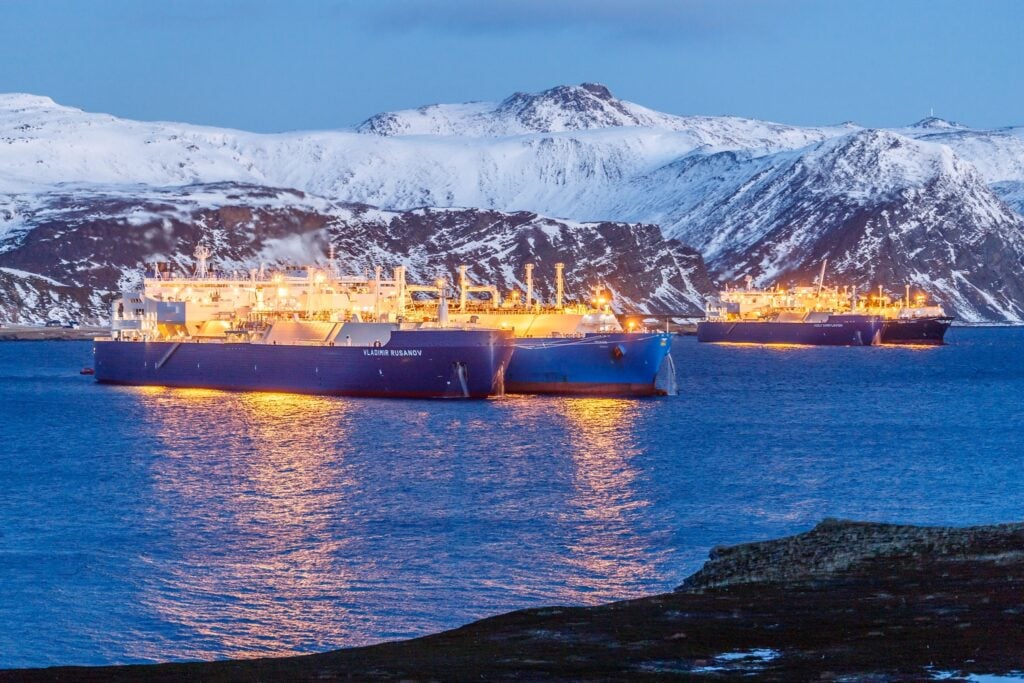
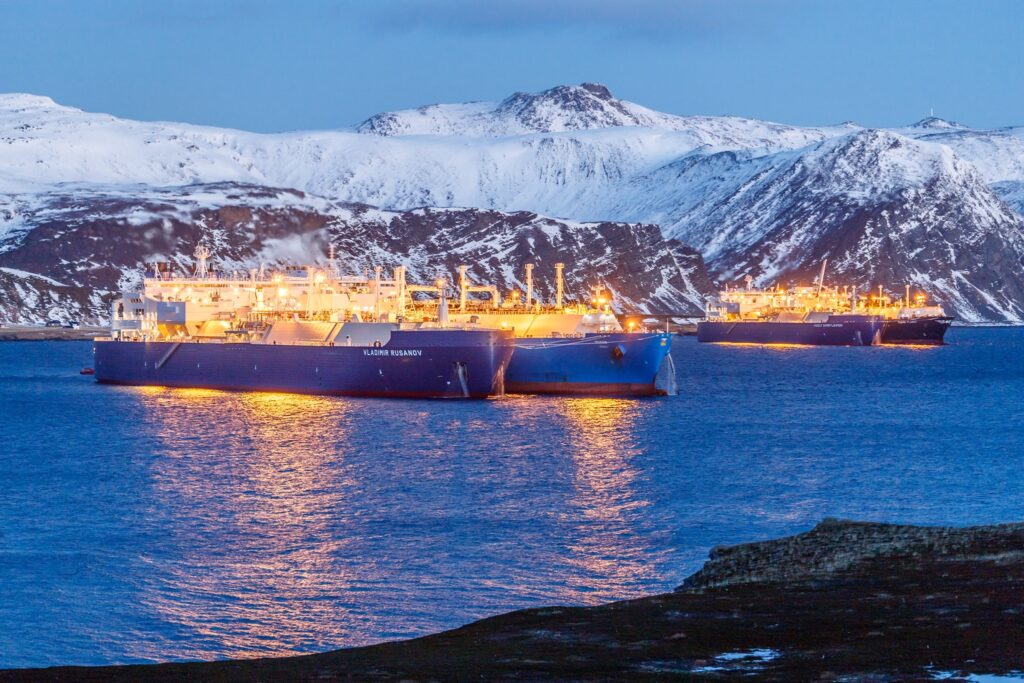
There is also a new ban on maintenance services for Russian LNG carriers and icebreakers, which prohibits major EU operators from subsidizing Russian LNG exports and further restricts the country’s ability to maintain its seaborne assets. In addition, the ban on LNG terminal services is expected to allow EU operators to terminate any long-term contracts with their Russian counterparts.
New measures set out in the package expand the ban on EU operators doing any business with an additional twenty Russian banks, with narrow exceptions such as humanitarian transactions, bringing the number of banks in the country excluded from access to the EU’s internal market to 70. The EU is also expanding the transaction ban to include four banks in Kyrgyzstan, Laos and Azerbaijan that are believed to be helping the Russian war effort by significantly thwarting sanctions or connecting to the Russian messaging banking network.
The 20th package includes a complete sectoral ban on conducting exchanges with any Russian crypto asset service provider, as well as any decentralized platforms that enable cryptocurrency trading due to their use in spoofing. The new measures ban the use and support of the cryptocurrency RUBx, a ruble-backed stablecoin, as well as the digital ruble, a digital currency under development by the Russian Central Bank, which is being set up to enable sanctions circumvention.
Maria Luis AlbuquerqueThe Commissioner of Financial Services and the Savings and Investment Union said: “I welcome today’s agreement. This comprehensive package – encompassing energy, finance and trade – will further constrain Russia’s ability to finance its brutal and illegal war. It represents another critical step in tackling sanctions evasion, and targeting third-country financial and infrastructure actors that enable fraud.
“For the first time, we are activating our anti-fraud tool to block exports of critical EU goods to a third country used to undermine our measures. The evidence is clear: the sanctions we have imposed are having a real impact. Their cumulative effect is weakening the Russian war machine, while Europe’s resolve remains steadfast. We will not falter, and we will not rest, until a just and lasting peace is secured in Ukraine.”
Furthermore, the package imposes new restrictions and bans on exports and imports in order to further disrupt and weaken the Russian military-industrial complex. This package consists of a new ban on the export of goods – from rubber to tractors, worth more than 365 million euros; New restrictions on the export of materials and technologies used in Russia’s military efforts, such as explosives, laboratory glassware, high-performance lubricants, and lubricant additives; new restrictions on the provision of cybersecurity services to Russia; A new ban on the import of minerals, chemicals and minerals, not yet subject to sanctions, worth more than €530 million; and a quota for ammonia to limit current imports.
The 20th package increases restrictions on the Russian military-industrial complex by designating 58 companies and associated individuals involved in the development and manufacture of military goods, such as drones. Additionally, the lists cover third-country suppliers of critical high-tech materials, such as entities in China, the United Arab Emirates, Uzbekistan, Kazakhstan, and Belarus, that have provided goods or dual-use weapons systems to the Russian military-industrial complex.
Given the EU’s determination not to systematically ignore cases of circumvention of its sanctions by exporters in third countries re-exporting sanctioned EU goods to Russia, the EU activated the Anti-Circumvention Instrument due to the systematic and continuing failure by the Kyrgyz Republic to prevent the sale, supply, transfer or export to Russia of certain machine tools and certain telecommunications equipment imported from the EU and used in the manufacture of drones and missiles in Russia.
The latest package adds 60 entities to the list of entities that provide direct or indirect support to the Russian military-industrial complex or engage in sanctions circumvention, and includes 32 entities established in Russia and 28 entities in third countries, such as China, Turkey, the United Arab Emirates and Thailand.
The new measures address mirror outlets that circumvent broadcast bans by publishing the same content online as listed propaganda media outlets, such as Russia Today and Sputnik; Therefore, the distribution of the content of these sites and mirror domains will also be blocked in the EU, making it easier to remove or block online sites that act as proxies or clones of official media channels faster.
Last but not least, the new measures prohibit accepting funding, including donations or grants, from the Russian government in the field of research and innovation. This applies to research institutes, higher education institutions and other EU bodies, as well as individuals associated with these entities.

Boost your brand with marine energy ⤵️
Steal the spotlight and establish your brand in the heart of the outside world!
Join us to make a greater impact and grow your presence at the core of the marine energy community!



